What We Do
From a snapped spring to a full door replacement - one local crew, upfront pricing.
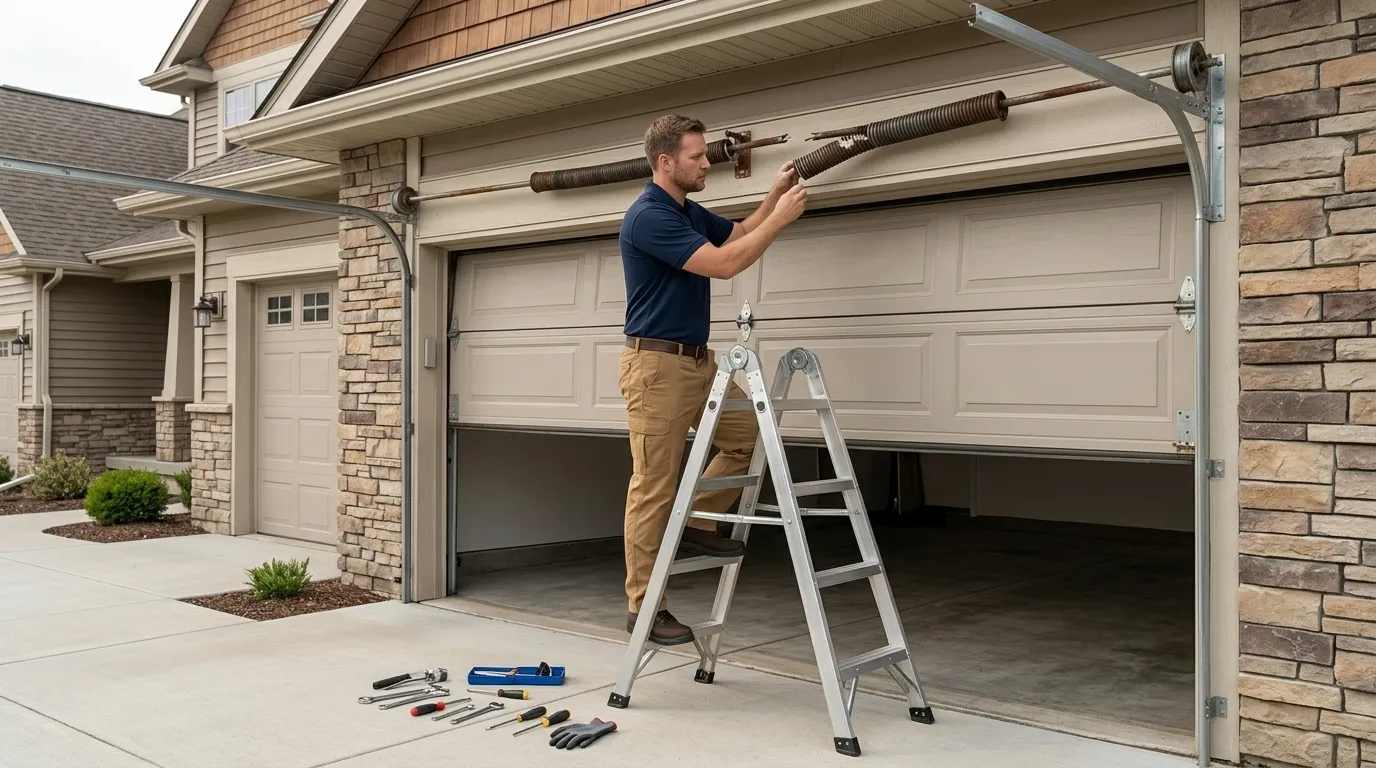
Off-track doors, snapped cables, bent panels and grinding openers - diagnosed and fixed.
Learn more
Torsion and extension springs replaced safely - the job you should never DIY.
Learn more
Doors jumped the track re-set, aligned and re-tensioned so they run true.
Learn more
24/7 same-day help for a door that's stuck, off-track or won't secure.
Learn more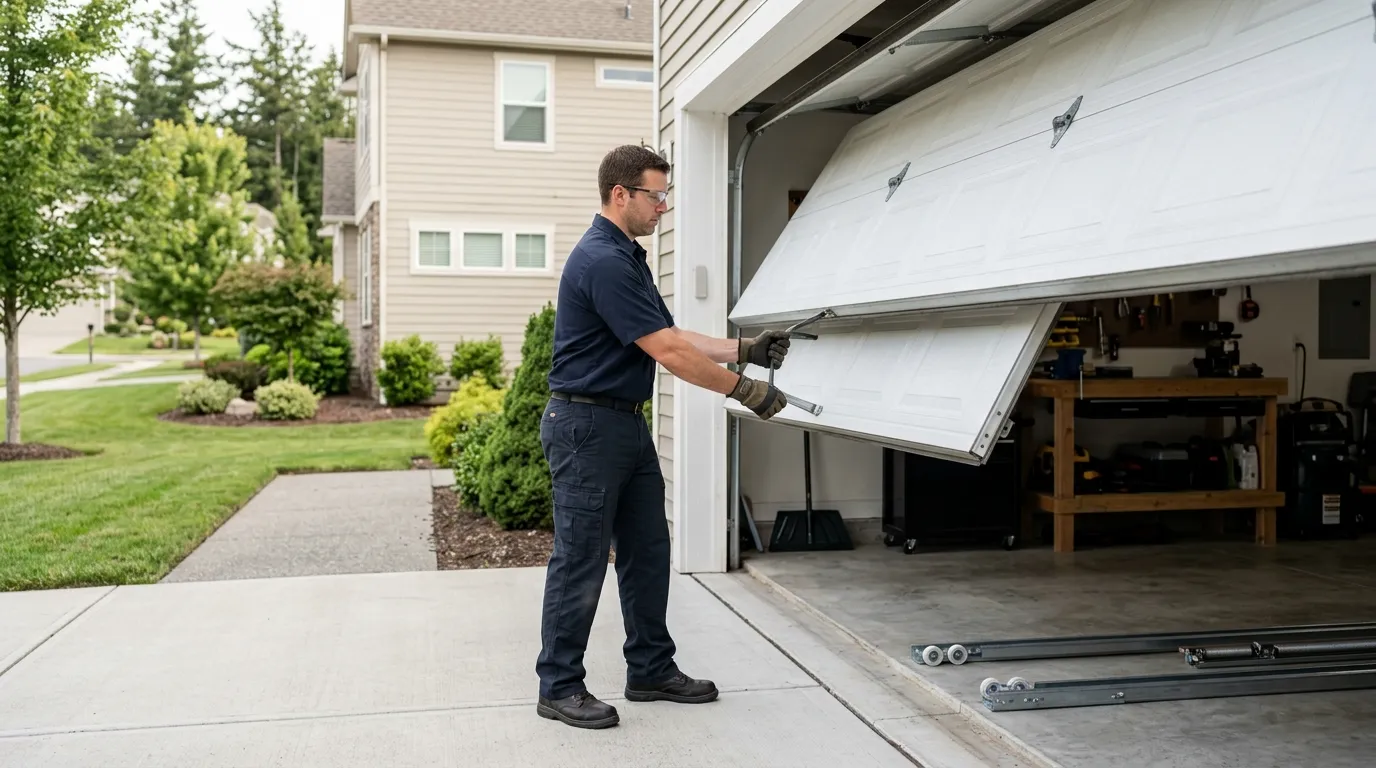
Spring tension, roller and track service that keeps an older door running quiet.
Learn more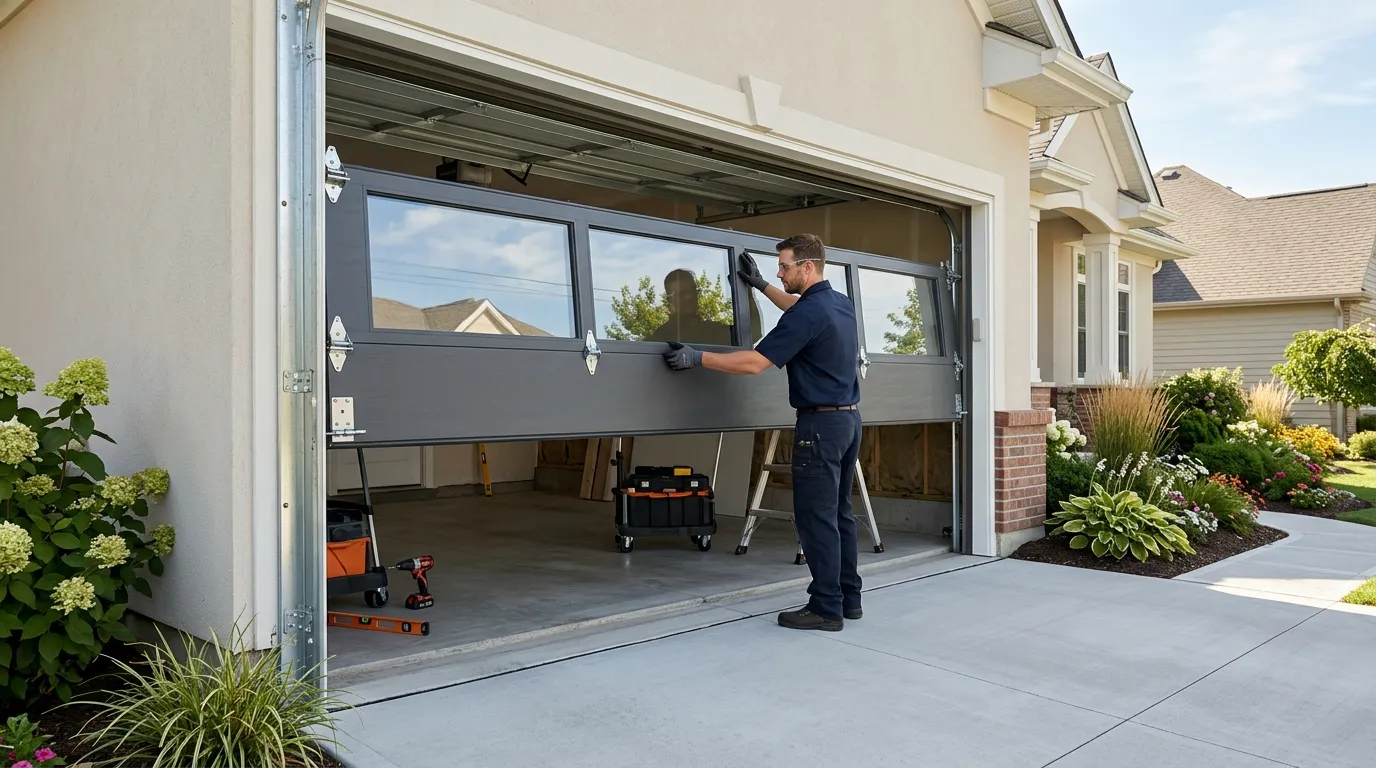
Rolling steel, sectional and high-cycle doors for shops, warehouses and lots.
Learn moreFast Response
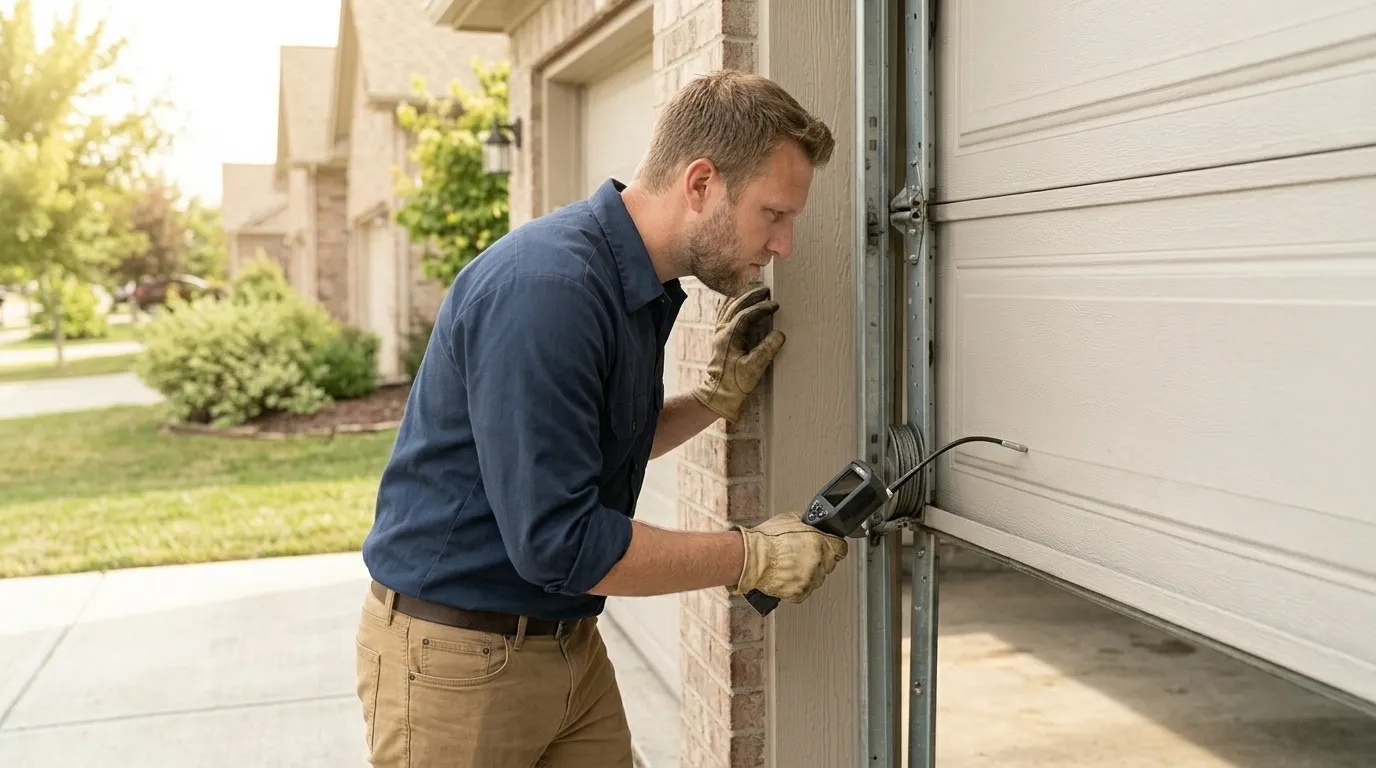
A stuck or broken garage door can't wait. Call before the afternoon and we can usually be out the same day - most repairs are diagnosed and finished on the first visit, with an upfront price before any work starts.
 Same-day service
Why Belleville Calls Us
How It Works
Call or request a quote and describe what the door is doing - noise, off-track, won't open.
A tech inspects the springs, tracks, opener and panels and gives you a written price first.
Most repairs are done on the same visit; installs are scheduled around you.
Our Work
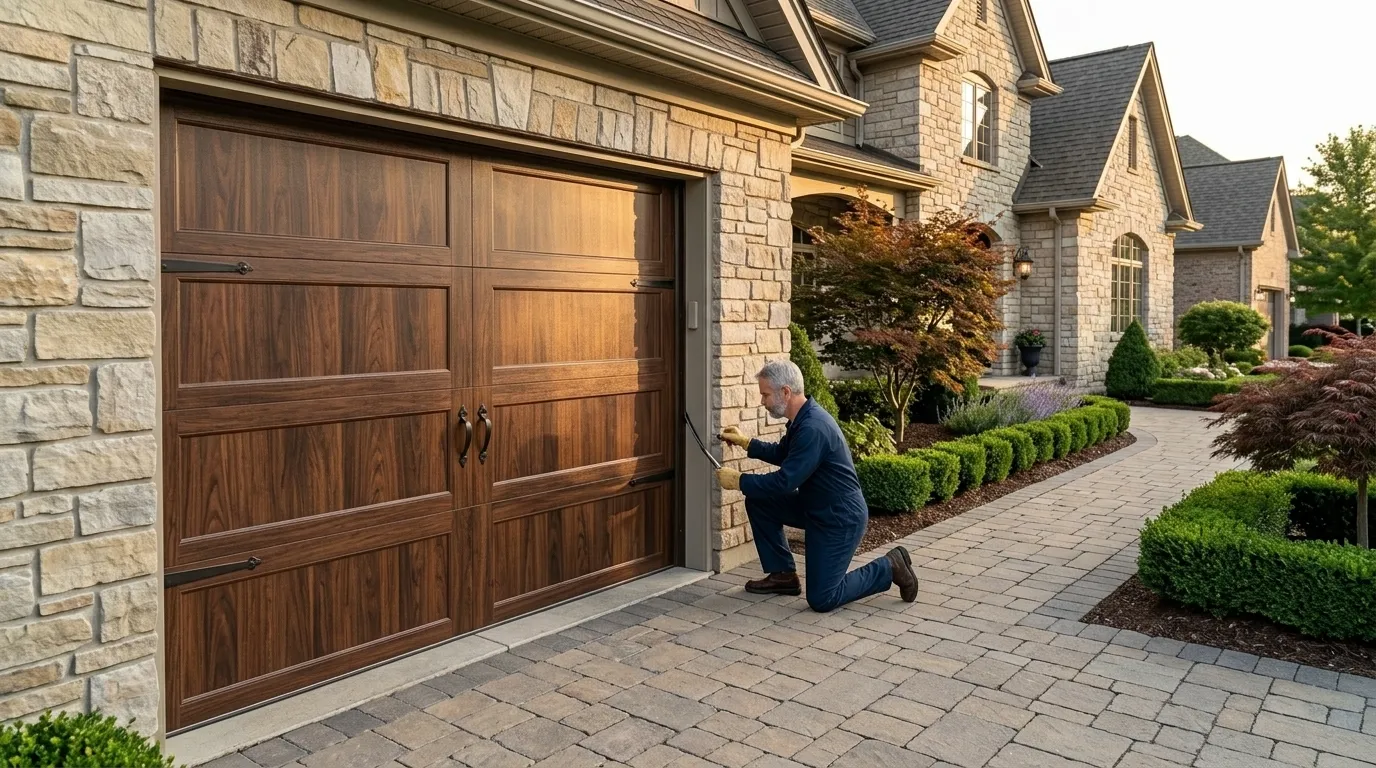
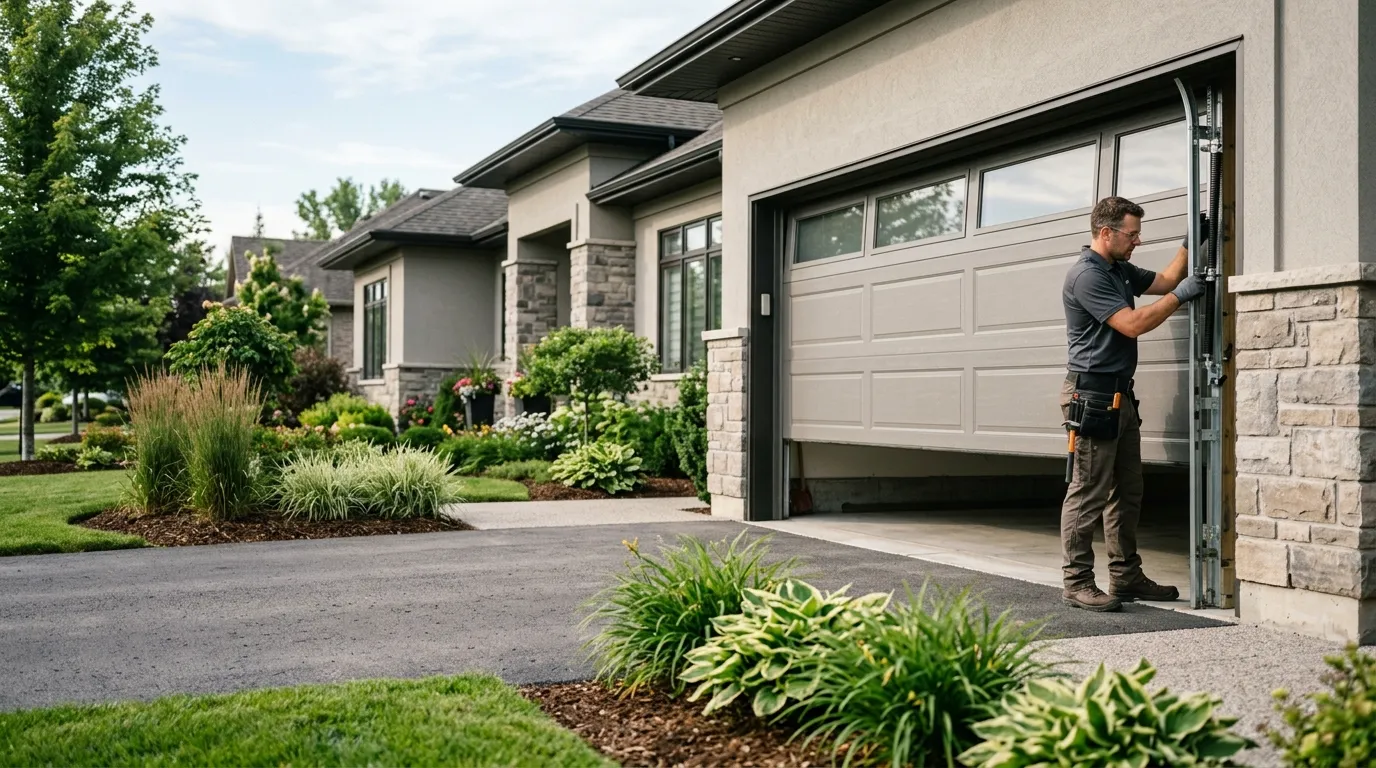
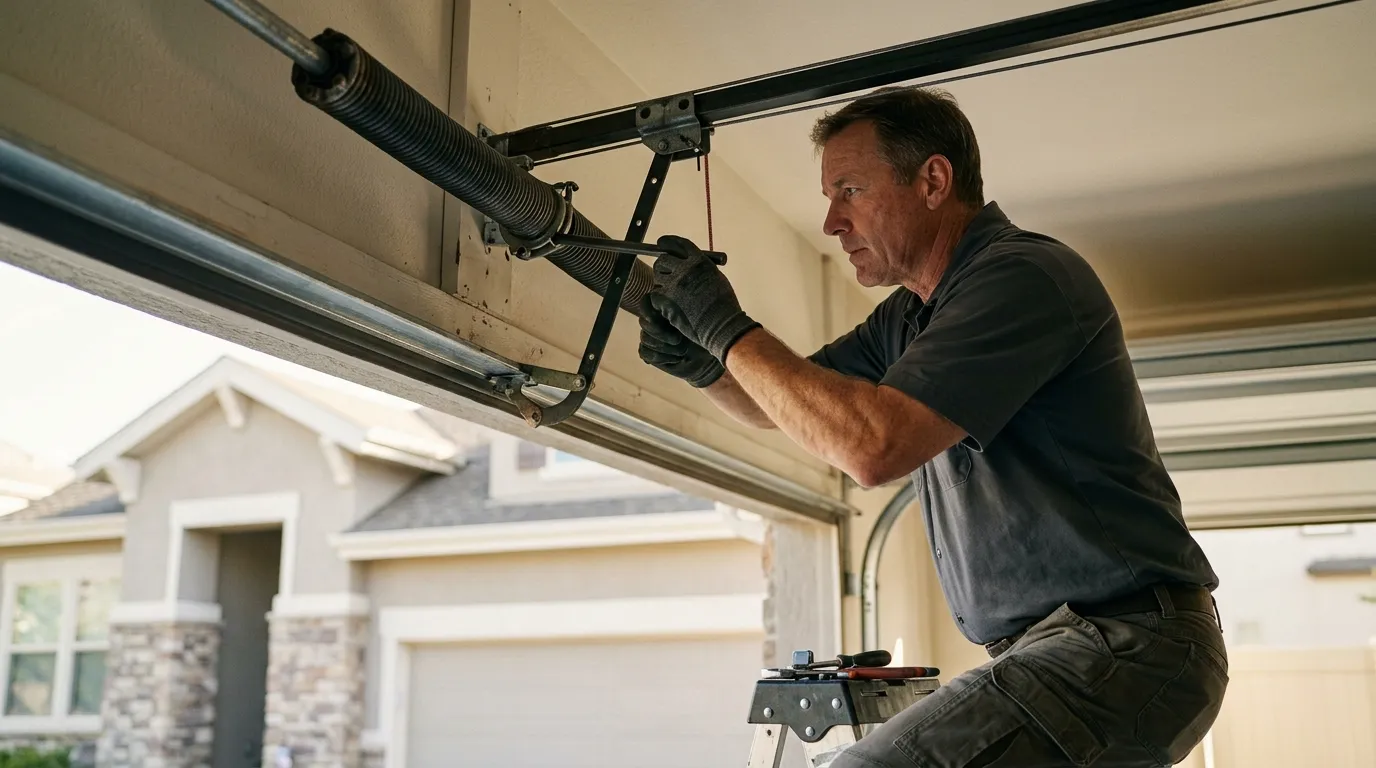
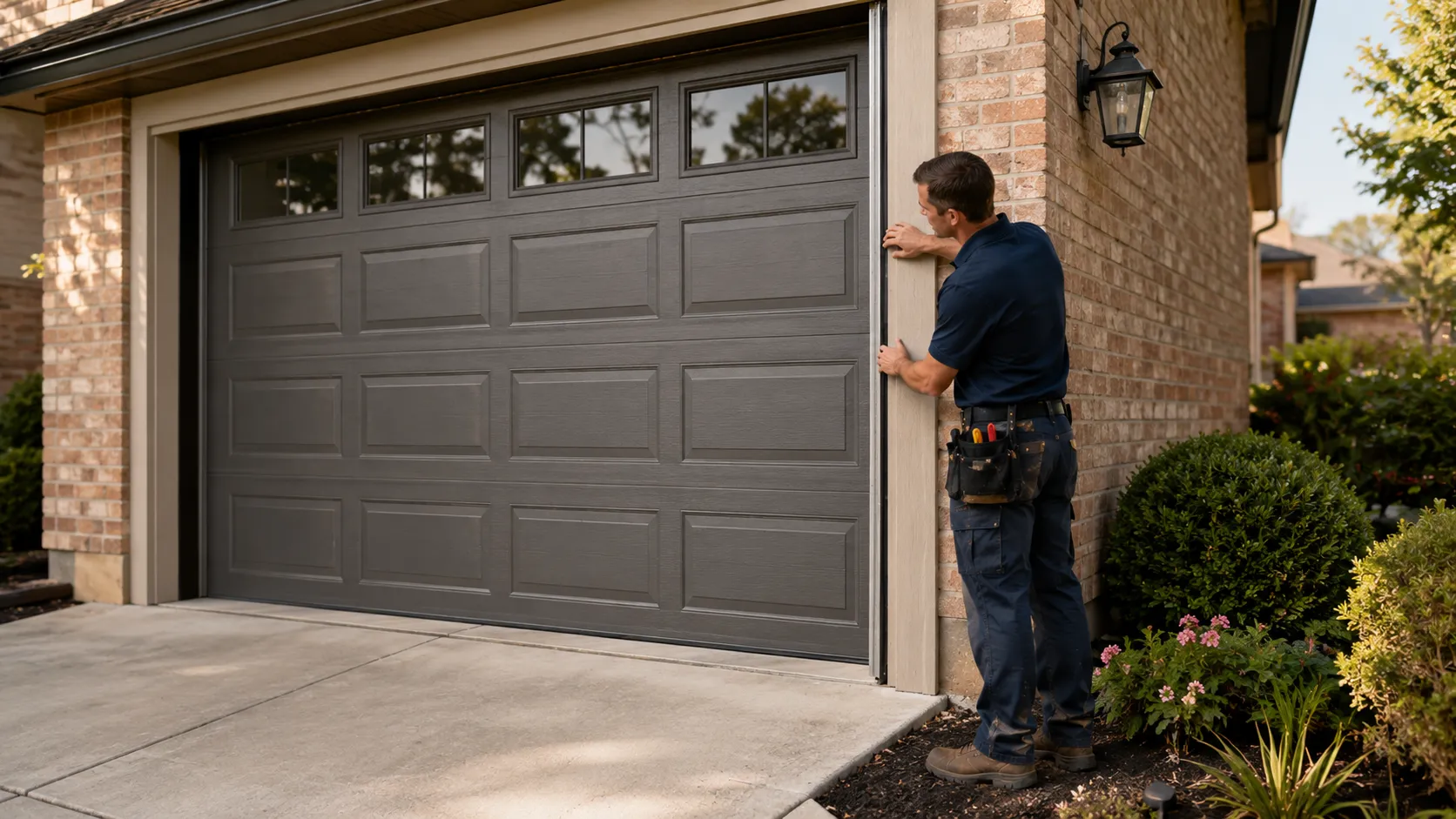
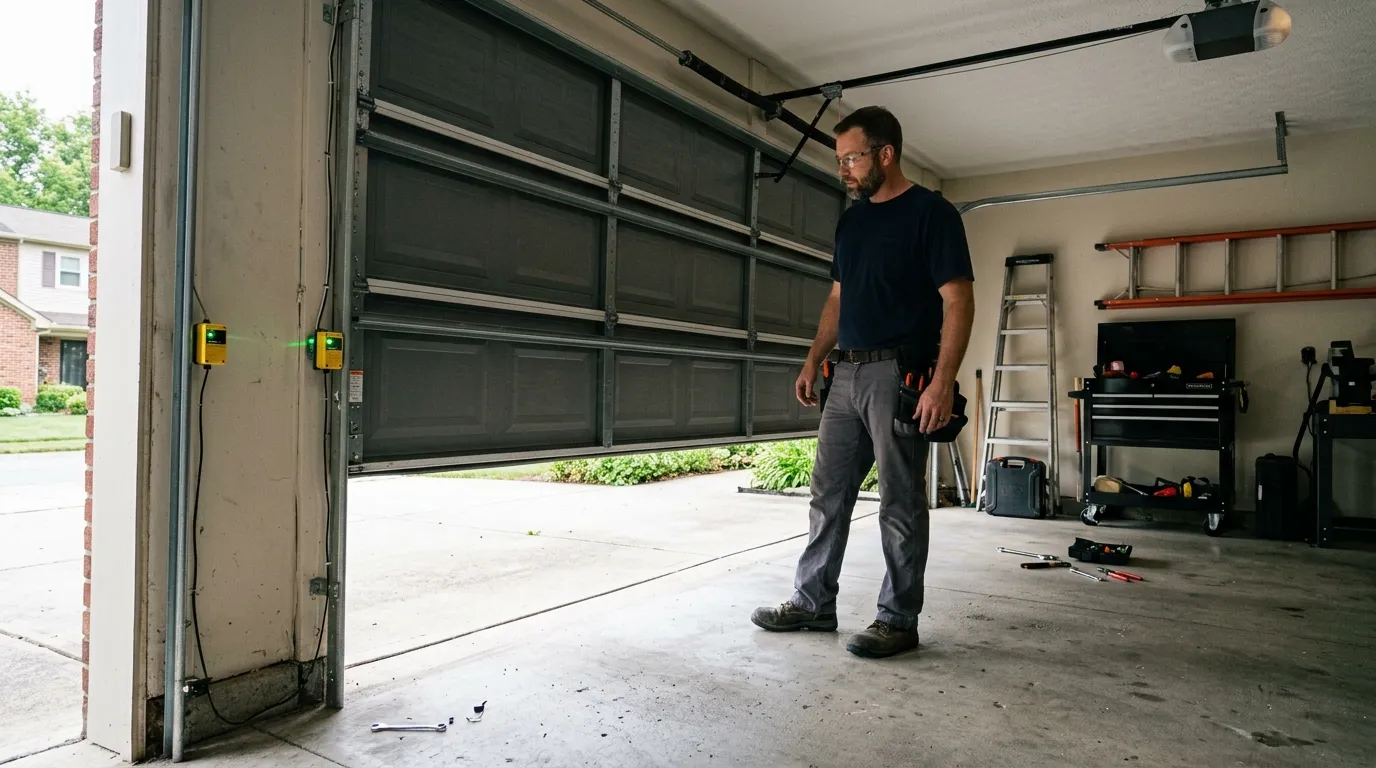
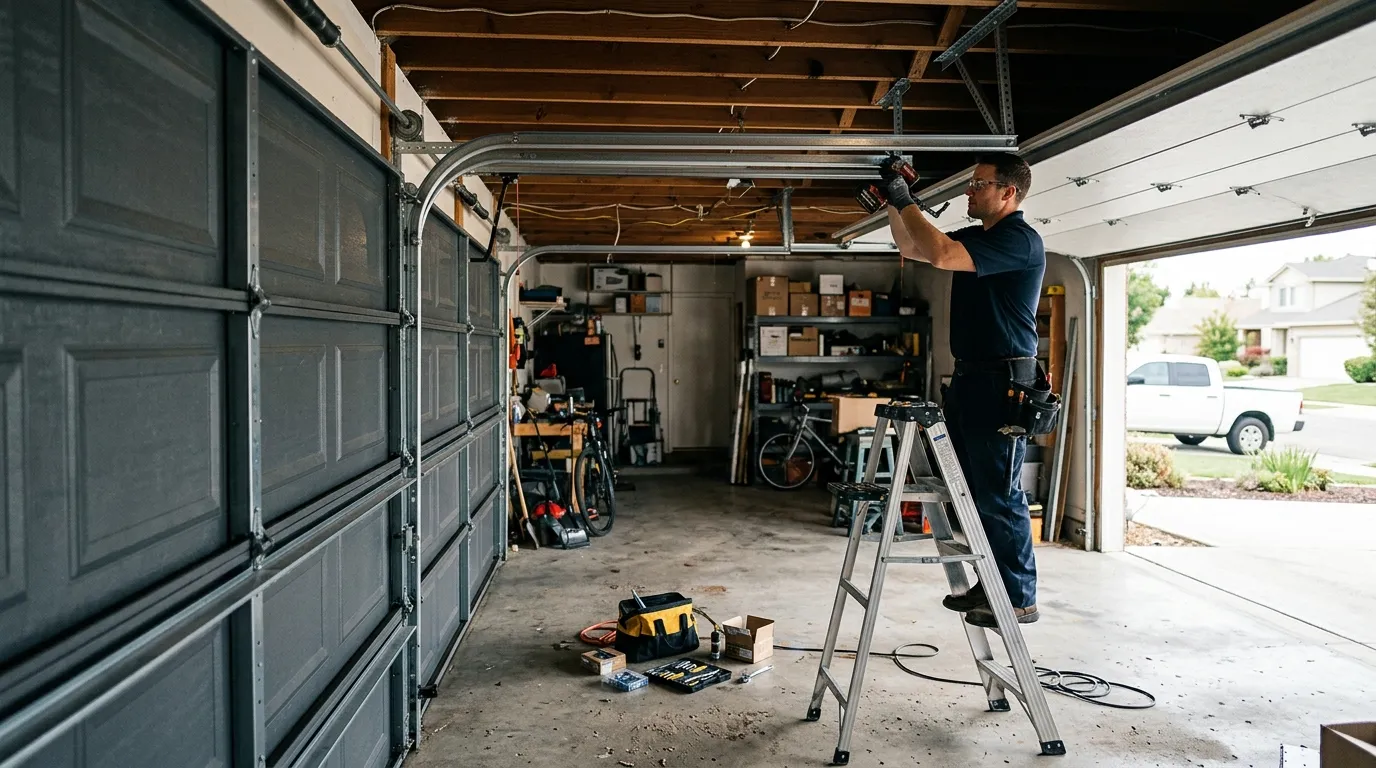
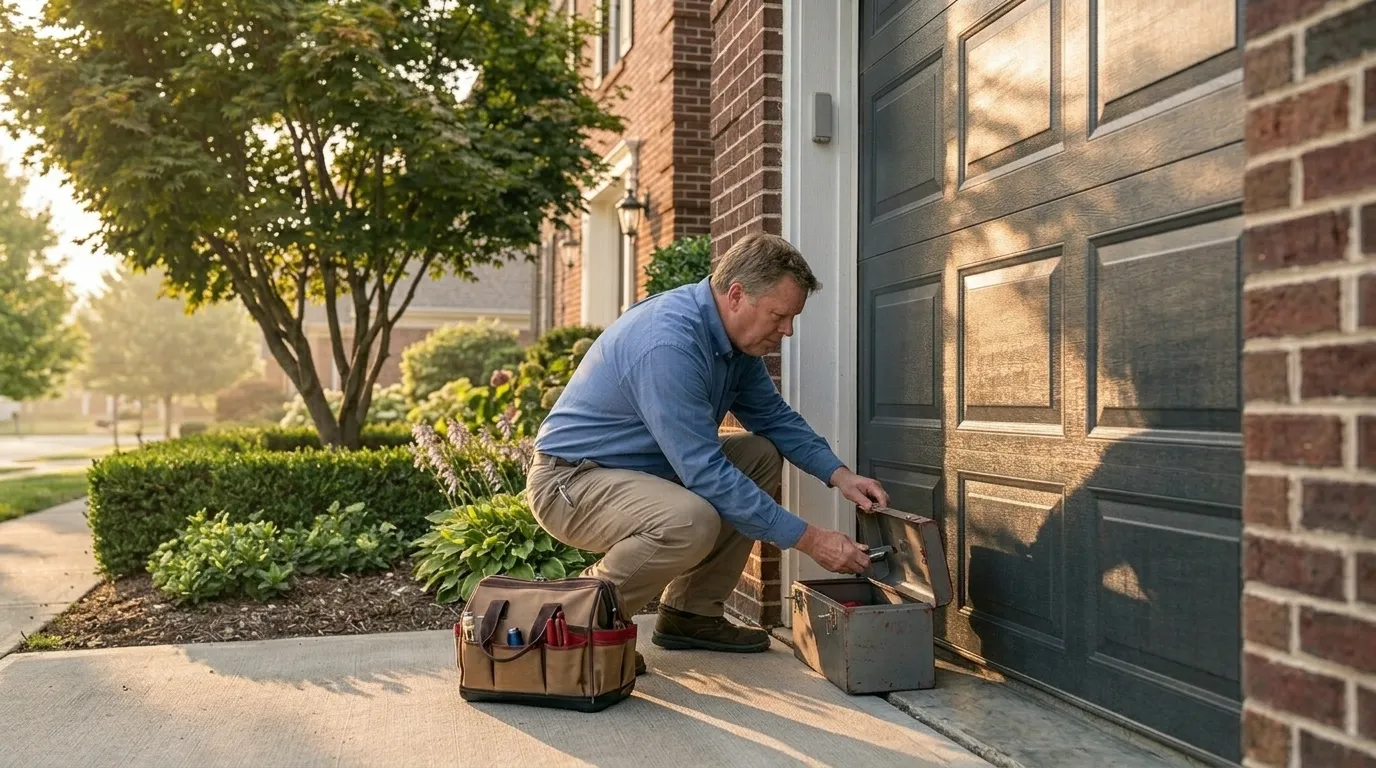
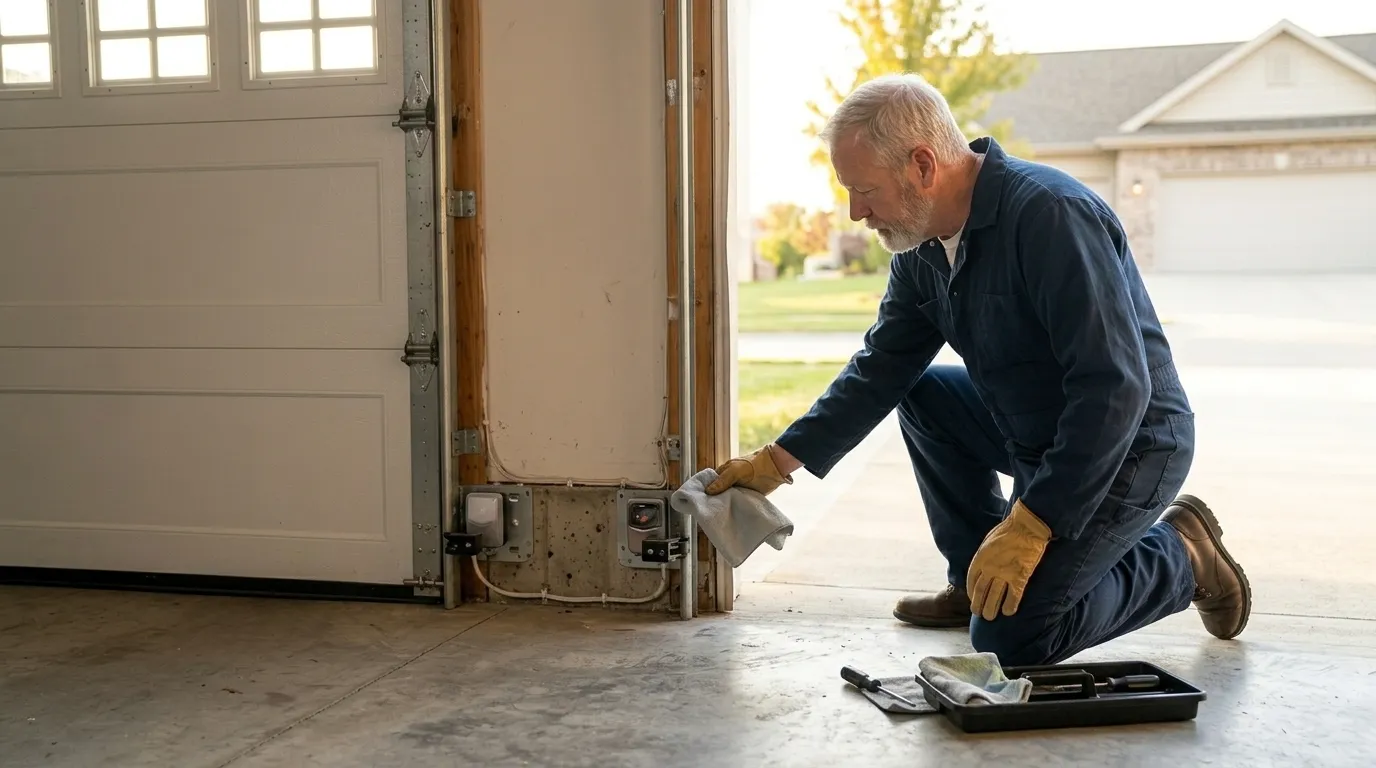
A look at doors, openers and springs we've installed and serviced across the Belleville metro.
Where We Work
Neighborhoods across the city and suburbs around the metro. Not sure if we reach you? Just ask.
Local Expertise
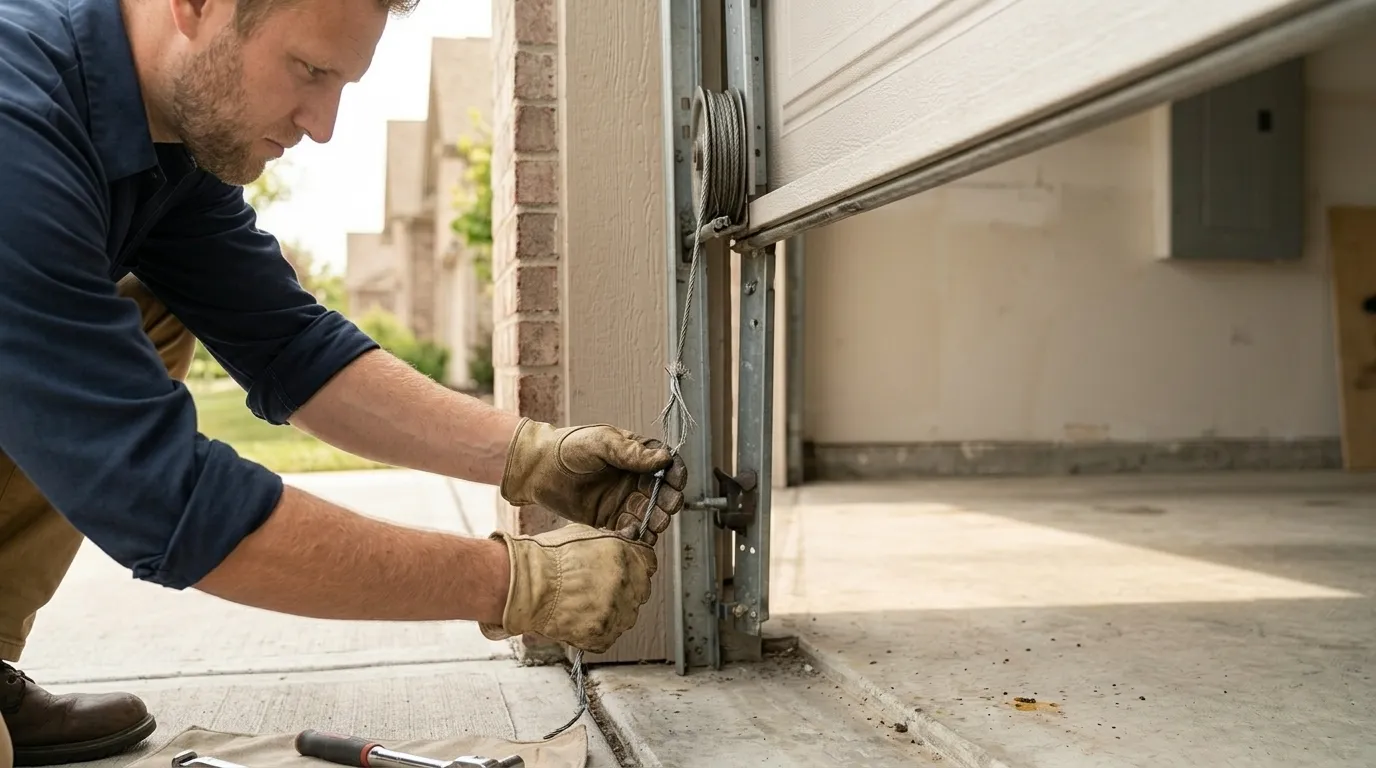
You call, you tell us what the door is doing - won't open, won't close, makes a bang and stops halfway - and we ask enough questions to bring the right parts on the truck the first time. That matters more here than it sounds, because a house built in 1965 and a house built in 1998 in the same neighborhood can have completely different hardware, even though they look the same from the curb.
We work out of Belleville and cover the towns around it - Swansea two miles off, Shiloh at five, Fairview Heights at six, O'Fallon and Millstadt and Freeburg and Smithton all sitting around seven. Further out we still run calls in Collinsville, Mascoutah, Columbia, Troy, Glen Carbon, and the rest of the towns within about fifteen to eighteen miles.
We give you a window, not a promise of an exact minute, because torsion spring jobs and opener swaps don't take the same amount of time, and we'd rather show up prepared than show up fast and empty-handed. Once we're at the door, we walk you through what's actually wrong before any tool comes out, and you get a price before we start - not after.
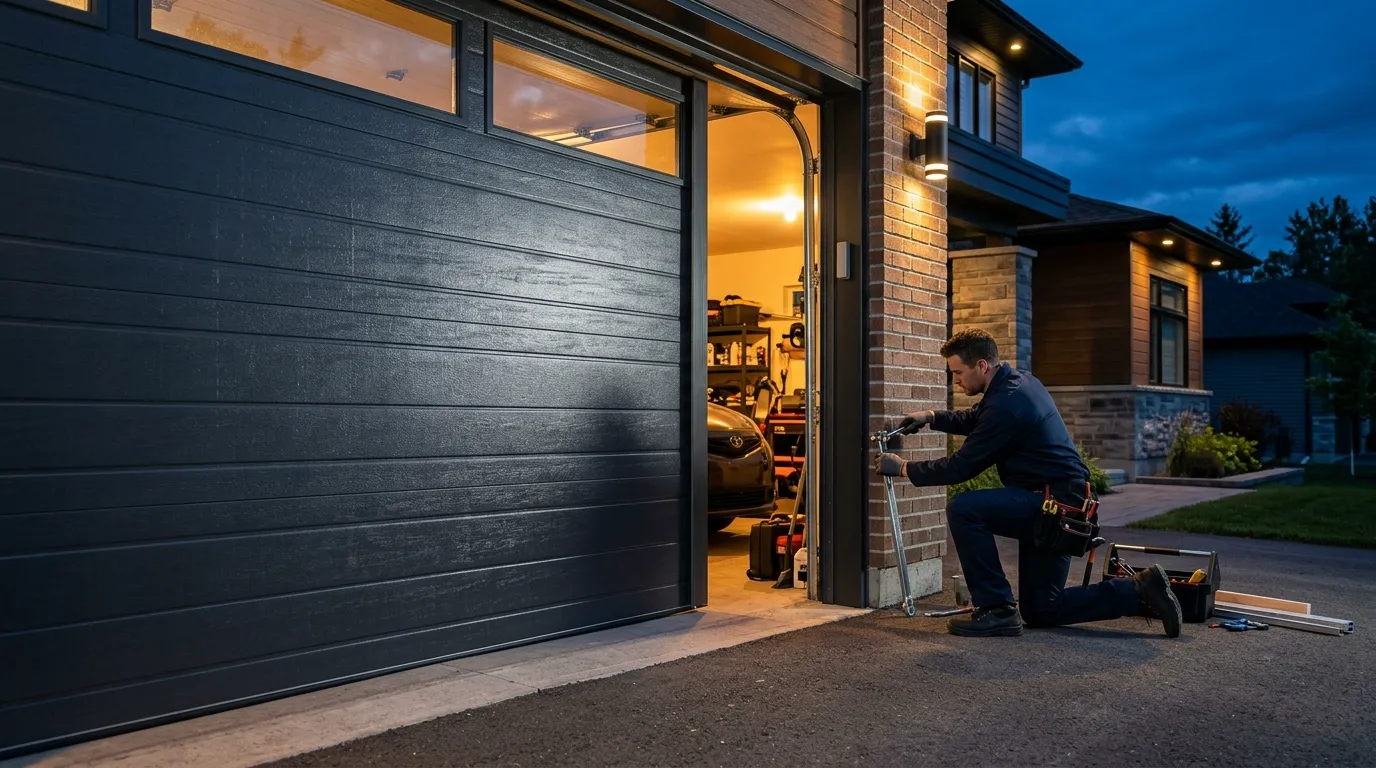
Most of the housing in and around Belleville went up between 1954 and 2000, with the median build year landing around 1977. That's not a random spread - it means a huge share of garage doors on this side of the metro are original one-piece or early sectional setups on hardware that stopped being made decades ago, paired with openers that have been swapped out once or twice since.
Across the roughly 32 named communities we work in - Belleville itself plus Swansea, Shiloh, Fairview Heights, Millstadt, Freeburg, Smithton, O'Fallon, Caseyville, Washington Park, Cahokia Heights, Sauget, Mascoutah, East St. Louis, Fairmont City, Collinsville, Lebanon, Dupo, Columbia, Madison, East Carondelet, Venice, Maryville, Pontoon Beach, Waterloo, New Athens, New Baden, Granite City, Troy, Glen Carbon, Trenton, and Alorton - the stock is mostly 1960s and 70s construction. That consistency is why a tech who's worked one street can usually tell you what's behind the next door before he opens the panel.
With 111,642 households and 61,934 owner-occupied houses across this service area, we're not guessing at a niche. This is the housing we work on every week, not the exception.
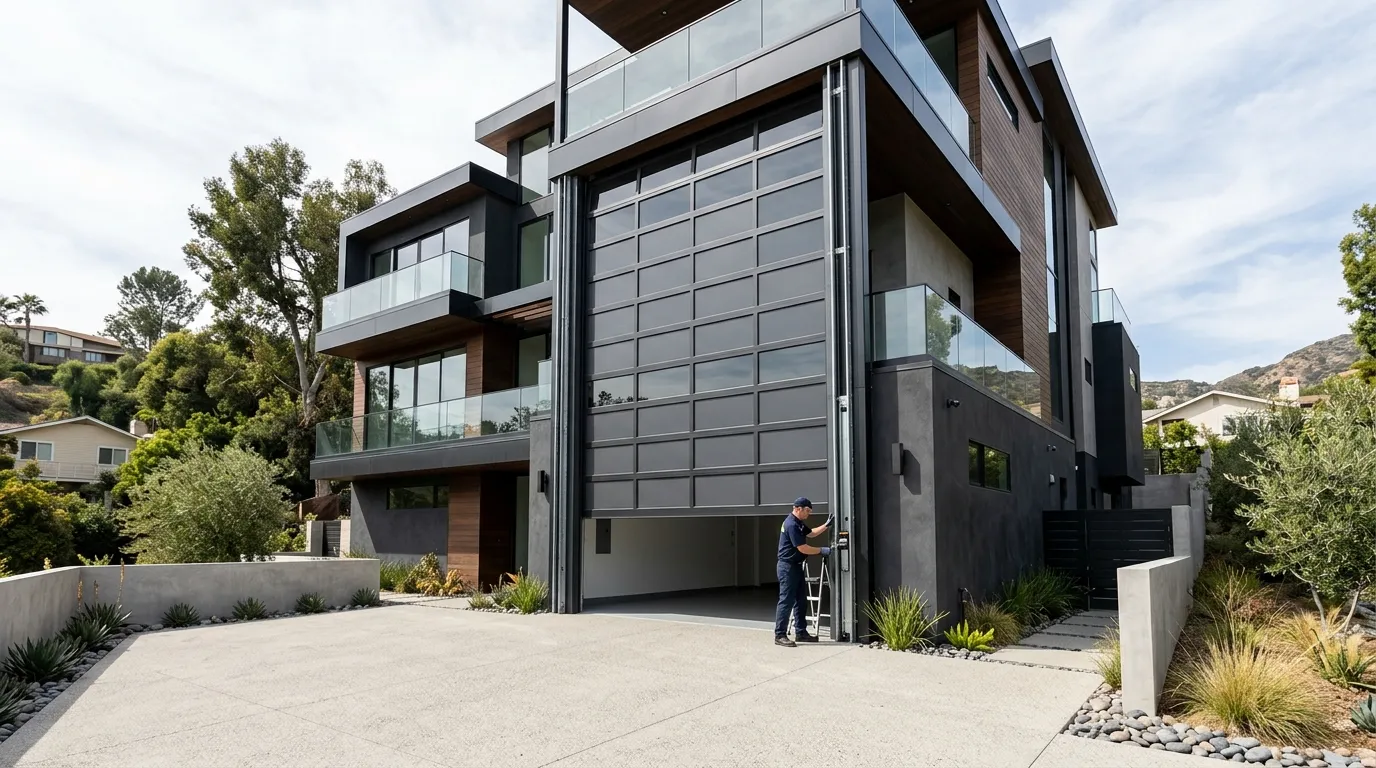
We don't publish a flat number because a broken spring on a single door and a broken spring on a double door aren't the same job, and a house from 1977 with the original torsion hardware isn't the same as a 2015 build with a modern extension system. What we can tell you is what moves the price: door size, how many springs, whether the drums or cables are also worn, and whether the opener is original or already replaced once.
Median household income across our service area runs $79,093, and most of the repair calls we run are priced against that - meaning we try to fix what's broken rather than push a full door replacement when a spring, a cable, or a set of rollers will do the job for years. We quote before we start work, not after, so there's no surprise when the truck pulls away.
One honest limit here: if your opener is old enough that the control board is no longer made, we may not be able to source a matching replacement part, and we'll tell you that up front rather than have you wait on a part that isn't coming.
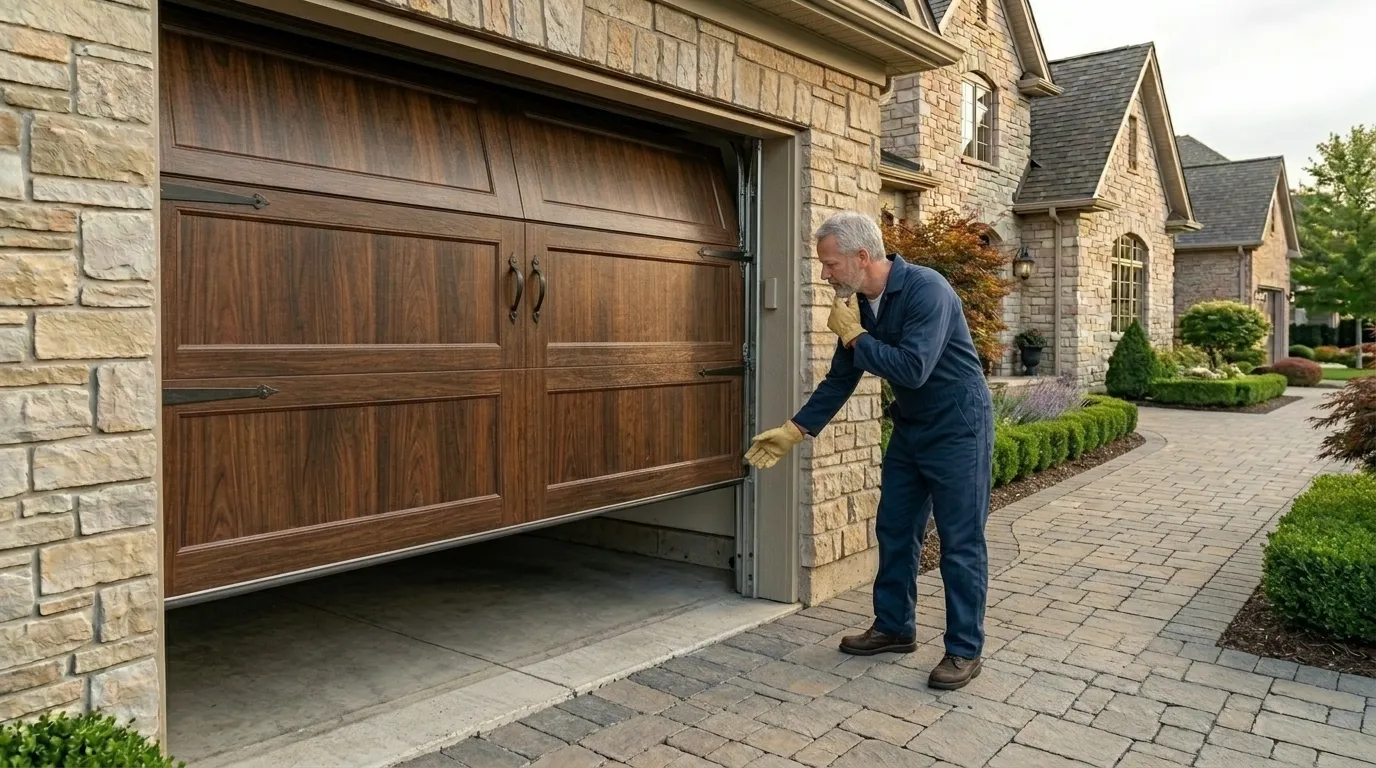
Given how much of the housing dates to the 1960s and 70s, the most common call we get is a broken torsion spring - the door won't budge, or it slams down fast because the spring that's supposed to hold its weight has snapped. Second most common: worn rollers and bent track on doors that have been running on the same hardware since the house was built.
The cold moderate climate here does its own damage over a winter. Steel contracts, grease stiffens, and openers that were already working hard suddenly can't push a door that's binding on a cold track. We see a jump in broken springs and stuck openers whenever temperatures drop hard for more than a few days in a row - the metal fatigue that's been building for years finally gives.
On the newer end of the stock - houses built closer to 2000 - the failures skew more toward opener logic boards and sensor alignment than pure mechanical wear, since those doors are still running mostly original openers that are just old enough to start failing electronically rather than physically.
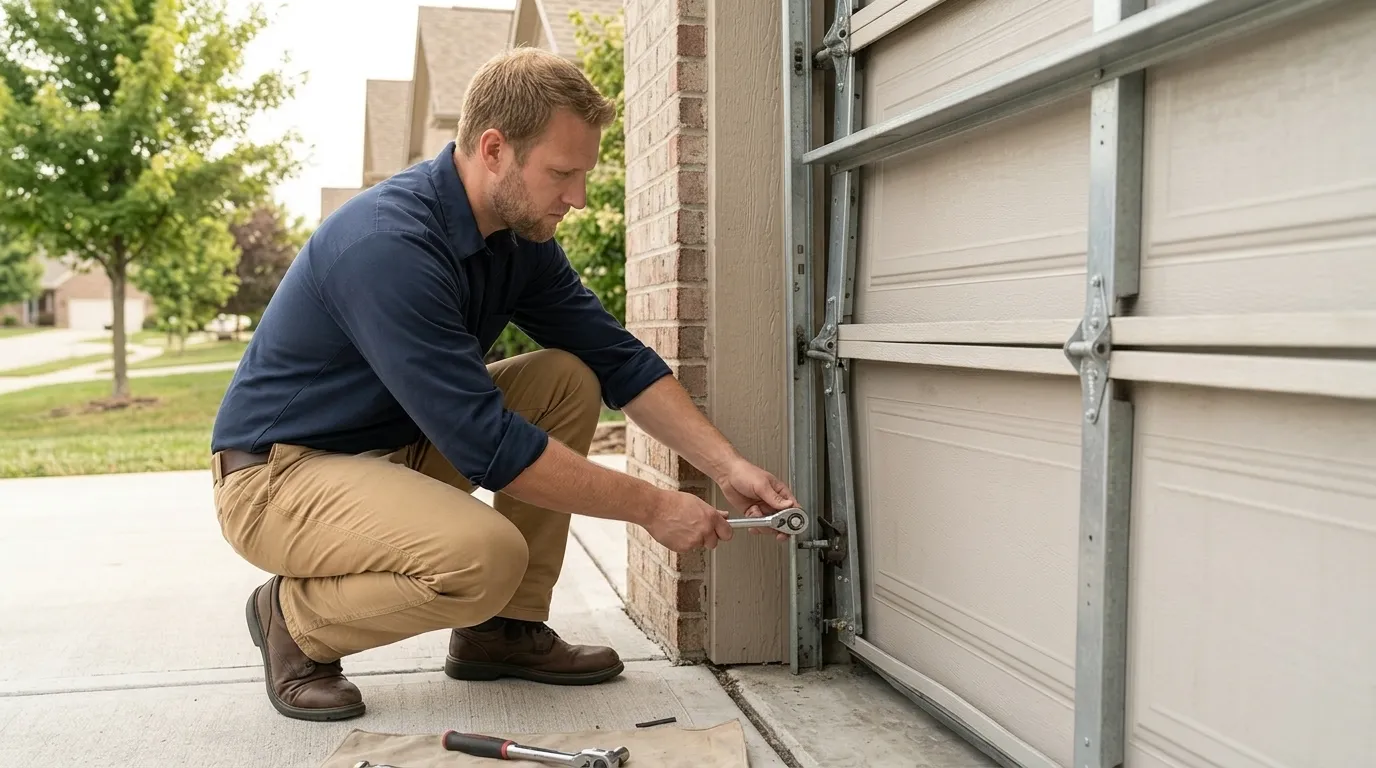
Sometimes the honest answer is to stop fixing and replace. If a door built in the 1970s or earlier has a bent track, a warped panel, and a spring that's already gone, you're often close enough to the cost of a new door that patching it piece by piece stops making sense - you'd be spending real money to extend the life of hardware that's already at the end of its run.
We'll tell you when we see that, rather than replace one part and let you call us back in six months for the next one. It's a harder conversation to have on the driveway than just doing the repair, but it's the one that actually saves you money over a few years.
What we won't do is talk you into a full replacement when a $200 part fixes the problem. Most of the calls we run in Belleville and the towns around it are straightforward repairs - spring, cable, roller, opener part - on houses where the door itself is still sound. Replacement makes sense far less often than people assume, and we'd rather earn the smaller job than push the bigger one.
Good to Know
Most houses in the area were built between 1954 and 2000, with the median landing around 1977, so a large share of the garage doors we work on are original one-piece or early sectional doors on torsion hardware from that era, sometimes with a replaced opener but the same original track and springs.
Yes. We run calls in Swansea, Shiloh, Fairview Heights, O'Fallon, Millstadt, Freeburg, Smithton, and the other towns within roughly fifteen to eighteen miles, including Collinsville, Mascoutah, Columbia, Troy, and Glen Carbon.
Cold moderate winters here stiffen grease and contract steel, which puts extra strain on torsion springs that are already fatigued from years of cycling. A spring that's been weakening for a while often finally snaps during a stretch of hard cold rather than in mild weather.
Yes, particularly on older doors from the 1970s or earlier with a bent track, a warped panel, and failed springs all at once. At that point the repair cost starts approaching a new door's cost, and we'll tell you when we see that instead of doing a patch job that won't last.
Call now or request a free quote - same-day service on most repairs, upfront written pricing.